
How Speaking More Than One Language Positively Helps Your Longevity?
Can becoming bilingual boost your lifespan? Let's explore!

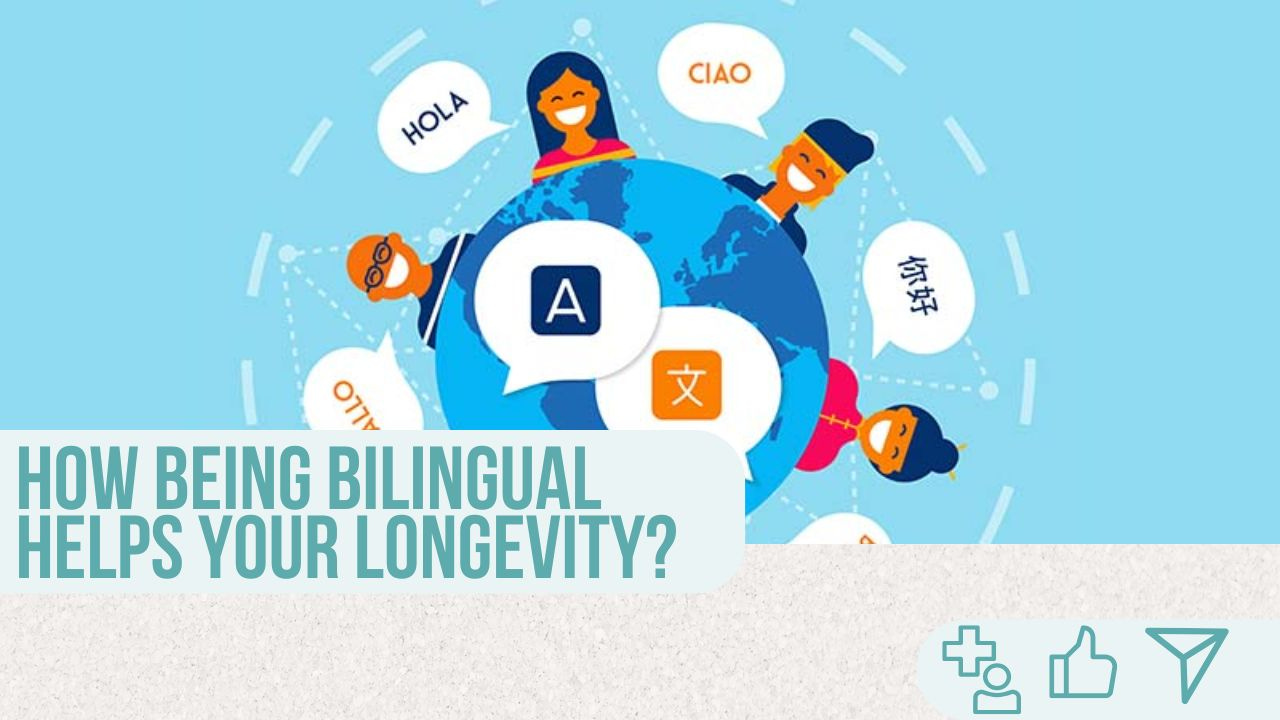
Introduction
Seeking mental health and longevity is a topic that most people treat with activities like sports or changing their eating habits. While these are valid ways to acquire a longer life span and become more cognitively sound, speaking two or more languages may be another way to live longer. In this blog, I'll explain how being bilingual improves your quality of life.
It Changes Your Brain
According to Cambridge, and their neurological study on language learning, adopting more than one language can help to improve their academic performance, boost concentration, and memorization, and strengthen their communication skills, and creativity.
According to their study, becoming bilingual allows the brain to expand its neurons and the way it's connected giving it a denser network that allows the person to learn and function better.
Learning a second or third language at a later stage in life is just as beneficial as those who adopt it at an earlier stage. Experiencing a new concept is part of brain development and learning a new language is ideal to avoid dementia and other degenerative neurological conditions.
Gain Wellness and Conscious Longevity
Education First, a leader in promoting language exchange programs has been studying how people's communication skills in blue zones contribute to their brain health and longevity. These communities rely on soft skills like in-person conversations that improve communication, active listening, and problem-solving. Even short, intense learning periods boost the attention skills.
Communicating well, along with adopting healthy food habits, daily physical activity, and other healthy habits has allowed them to live as close to 100 years without chronic diseases or cognitive decline.
Speaking multiple languages can improve our brain’s overall function and ability to perform essential actions like storing and recalling information, processing memories, concentrating, and problem-solving. Plus, the other skills that develop as you study also support long-term brain function, like effective communication, active listening, and problem-solving.
Being able to do these things in multiple languages allows us to become more cognitively aware and prolong our mental well-being, and the growth of the hippocampus, an area that's involved in handling memories, learning, and dealing with emotion.
This is an important part of the brain to take care of at any age — its degradation is closely linked to Alzheimer’s disease and struggles with memory as we get older.
An Option To Treat Autism
New research from the University of Miami indicates that speaking more than one language can help in the treatment of children with autism. They found that children who spoke multiple languages often had stronger executive functioning skills.
This means they can control impulses and switch between different tasks more easily than children who only speak one language.
These are key mental processes that help them plan, focus, remember instructions, and manage multiple tasks effectively.
It's worth noting that children with autism may require a caretaker or some specific routine as they develop and teaching them a new language can increase the chances of them being as self-dependent as possible.
Conclusion
Wellness is an annoying trend that has become a chore. We are constantly bombarded with fads and dangerous practices that ironically make us more unhealthy while thinking that a six-pack or a gluten-free diet will make us live past 100 years.
We live in a world where you're told that longevity involves super strict diets and hardcore workouts that usually are some of the most detrimental activities you can do if you don't have the right approach.
Once the brain fails, the rest will follow through. We have to put more mental reps for those brain gains.
If you think about it, this allows us to expand our knowledge and our brain size to reach longevity, regardless if we're Mr. Olympia or a Victoria's Secret model.
I hope you found this week's blog useful and let me know what you liked about this topic.
Talk to you on the next one.